
From Abeokuta, Ogun State, to producing Burna Boy’s Giza and records for Seyi Vibez and Reekado Banks, Elijah Olanite, professionally known as The Beat Modra (TBM), has quietly built a catalogue that speaks for itself. But if there’s one lesson his journey has taught him, it’s that making great music is only half the job. The other half is understanding the business behind it. Afro Soundtrack sat down with TBM to talk about finding his signature “Forest Sound,” navigating the music business, and why understanding royalties changed the way he thinks about his career.
Your stage name, The Beat Modra, is quite unique. What’s the story behind it?
The name came naturally. Before I became a producer, I was already making music as an artist. When I started producing, people kept telling me I was doing well on both sides. They would say I was “killing” every beat, and that’s how the name The Beat Modra came about because every time, I murder the beat.
You started as an artist before becoming a producer. How did that transition happen?
I actually got into production because I wanted to produce my own music. I wasn’t thinking about producing for other people but when opportunities started coming and people wanted me to produce for them, I realized I could make a career out of it. The truth is, everybody is looking for money and as a street boy I had to put more energy into it and take it seriously.
Which one do you focus on the most currently?
I do both. While I am dropping my own music, I also work with other producers depending on my inspiration and if I like their sound. I have a very specific sound in my head that I like to create. Because of that, I don’t produce for just any artist. I have particular artists I can identify and say, “This one will do well on my beat,” or “This artist has a sound similar to mine, so if we work together, we are going to make magic.
How would you describe your sound?
My guys call it Forest Sound, and so do I. I coined that name myself, around 2021, and it just caught on from there. I love ancient, indigenous sound, all that old school, way-back instrumentation. When I say Forest Sound, I mean a deep, textured kind of Afrobeats built around flute, violin, all those ancient instruments. That’s the genre I’d put my sound in.
During your song collaborations, how do you balance building relationships with artists and discussing the business or “money talks”?
At first, I just fall in love with the chemistry and the creative process. I genuinely love doing the work. But eventually, I have to activate the money side because whatever you do in this life, you’ll still need money. I love the collaboration and the energy when we are truly enjoying the session. I know the money is going to come, but the energy and the work always come first for me.
Do you talk about the money first or it’s the last thing you talk about?
It depends on the artist. When upcoming artists reach out, I understand where they’re coming from because I’ve been in that position myself, reaching out to people and hoping for an opportunity. If I genuinely connect with their sound, I’m willing to work with them. Sometimes that means adjusting my fee to fit their budget, and other times it’s about finding a way to make the collaboration happen.
With more established artists, I usually have a clear idea of the people I’d like to work with because I believe our sounds will complement each other. Once we decide to collaborate, the creative process always comes first, but when it’s time to release the music, the business side is handled properly, from agreeing on my fee to confirming royalty splits. I don’t always lead with money because I believe a great record can create opportunities that go far beyond an upfront payment. If I know the song has long-term potential, I’d rather make sure the work is protected and that everyone understands their share. By the end of the process, many of those collaborations grow into genuine relationships.
Which pays off more in the end, an upfront fee or royalties?
I do both, honestly, and I still do both till today. When I meet an artist, I check the stage they’re at, their energy, their catalogue, whether they’re doing real streaming numbers. Many of them are still early in their careers and haven’t fully understood royalties yet. If I sense an artist might not generate real numbers, I’ll ask for their budget and collect my fee upfront, then everybody moves on. But if I believe in where they’re headed, I let the relationship build first. I do my job, they fall in love with it, and when it’s time to drop, I know the royalties will pay more than any upfront fee ever could. I may not get cash from you directly, but you become the artist who brings me the next artist, because people hear the song and want that sound too. That’s happened to me more than once.
You’ve mentioned that many producers don’t fully understand royalties or split sheets. Since joining Afro Soundtrack, what’s been your biggest takeaway?
Honestly, the biggest thing for me is how easy everything is. I’ve worked with other publishing companies before, and the process always felt stressful. There were too many steps. I had to download different apps, enter different codes and follow long processes. Eventually, I gave up because it became overwhelming.
Afro Soundtrack has been the easiest platform I’ve worked with. I can see everything on my dashboard, understand what’s happening and, most importantly, receive my royalties directly into my Nigerian account. That made a huge difference for me. At first, I was just trying it out to see how it worked, but after using it, I was genuinely impressed. Everything has been seamless.
You’ve also tried the new Afro Soundtrack app. What has your experience been like?
It’s very easy to use. Everything is well organised and simple to understand. From the dashboard to tracking royalties and requesting payments, the whole process is straightforward. Even if you’re using the app for the first time, you can find your way around without any difficulty. That’s one of the reasons I recommend Afro Soundtrack to other producers. Many of them have faced the same challenges I experienced with royalty collection, and I believe the platform makes that process much easier.
Looking back on your career, what’s the biggest lesson you’ve learned from working with different artists?
My biggest lesson is that I should have paid attention to royalties much earlier. I had already worked on several successful songs before I truly understood how royalties and music publishing worked. I knew they existed, but I never paid much attention because I was focused on creating music. Then the fame started coming. I couldn’t even walk around my neighbourhood freely because everyone was calling my name and talking about the artists I had worked with but the reality was different.
“People thought I was making a lot of money, but I didn’t have a dime.“
That was when I realised I needed to understand the business side of music. Since then, I’ve learned a lot about publishing and royalties, but I still wish I had started earlier. Looking back, I know I missed opportunities simply because I didn’t understand how everything worked. Now, with Afro Soundtrack, I finally have a system that makes managing my publishing and royalties much easier.
So, would you say more Nigerian music creators need royalty education?
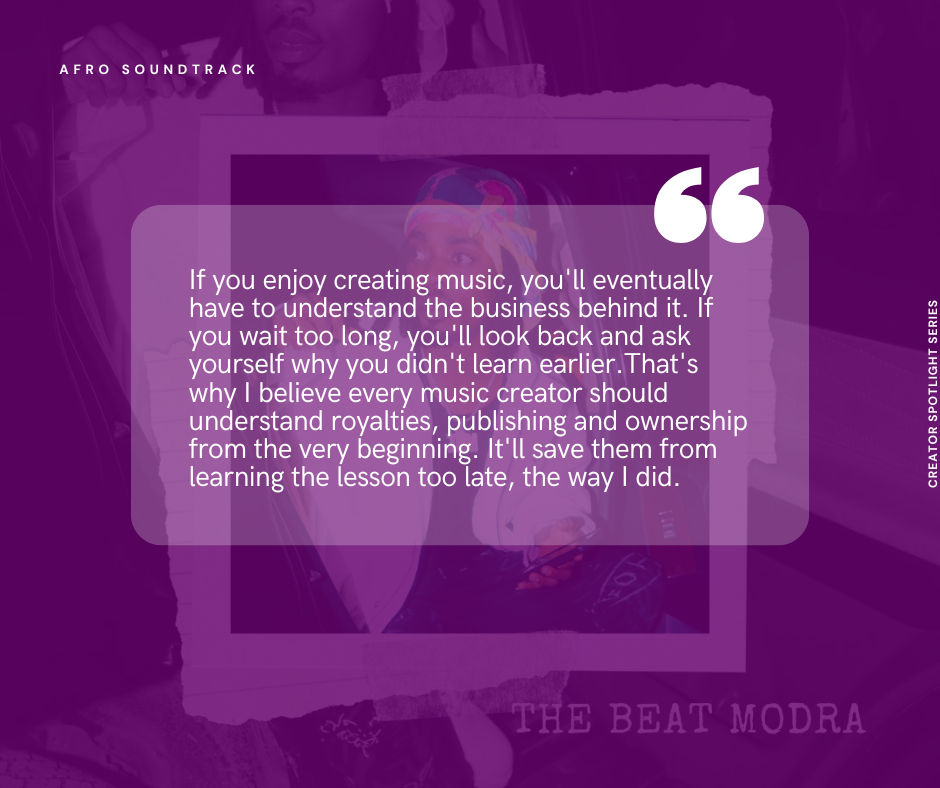
Absolutely. If you enjoy creating music, you’ll eventually have to understand the business behind it. If you wait too long, you’ll look back and ask yourself why you didn’t learn earlier. That’s why I believe every music creator should understand royalties, publishing and ownership from the very beginning. It’ll save them from learning the lesson too late, the way I did.
This interview is part of Afro Soundtrack’s Creator Spotlight series, where African artists, producers, session musicians and songwriters share the stories, lessons and business insights shaping their careers.
Your Music Deserves Every Royalty.
Join African artists, producers, session musicians and songwriters using Afro Soundtrack to protect their music, manage publishing and collect every royalty they’ve earned.
Get the Afro Soundtrack app