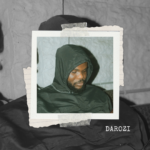

From Shoday’s Money and Caution to My Sunshine, an original soundtrack for Funke Akindele’s film The Four: No one fights alone. Adesegha Adedayo Olorunfunmilola, professionally known as Seghabeatz, is a Nigerian producer whose journey began with playing instruments in church before evolving into music production. With a growing body of work and a love for Afrobeats, he is focused on sharpening his craft while learning more about the business and value behind the records he creates. Afro Soundtrack sat down with Seghabeatz to talk about his creative process, producing My Sunshine for The Four: No one Fights alone, working with artists, producer recognition, royalties and his ambitions for the future.
Every producer has a story about how they got started. How did you get into music production, and what made you decide to pursue it seriously?
For me, it started with being an instrumentalist in my church. I play drums, piano and bass guitar. Then I started learning music production with my laptop. At first, I was just playing around with it, then I met my elder brother’s friend who was into music production, and I really liked what he was doing. So I started learning from him. From there, I kept experimenting with my laptop and gradually became more interested in production.
So honestly, there wasn’t really one specific moment when I decided I wanted to do it. It happened gradually. I just kept learning and playing around with it until I realised I was really interested in it.
You already had a background in playing instruments. When you started producing, what did you discover about your role in creating a song?
For me, the biggest contribution is the beat. It’s the beat because it’s not easy to create, especially when you don’t have anything to start with. You have to create from nothing.
You’re playing the guitar, the bass, building the drums and putting all those elements together. So the beat is the most challenging part because you’re creating everything from scratch.
Most of the time, that’s how I work. I don’t really use ready-made beats. When an artist comes to me, I create from scratch and build the whole sound around the idea.
When you’re creating a beat, what tells you that it’s finished? How do you know you’ve achieved the sound you were going for?
I think it gets to a point where I’ve been able to play what is in my head into the beat, and I don’t have anything else I want to add anymore. That’s when I feel like, okay, this thing is good.
Once I’ve been able to play what I had in my head and put it into the beat, then I’m satisfied. I’ll just export it and leave it like that.
You’ve worked with different artists and music creators. What have those collaborations taught you about understanding what an artist needs from a song?
It has actually helped me a lot. When I work with different artists, some of them come with ideas or challenges that push me, but those experiences have helped me a lot. It’s not always easy to create something from scratch, especially when every artist comes with a different sound or approach. I’ve learnt a lot from working with artists across different genres, and it has really improved me as a producer.
You’ve also built recurring creative relationships with artists like Shoday. What changes when you work with an artist over a longer period of time?
There are differences with all of them. Everyone has their own sound. Maybe one or two of them have some similarities, but they still have their differences, and that makes it challenging for me.
For example, Shoday has his own sound, Billirano has his own sound, and my other artists have their own sounds too. So I always have to approach each person differently. It can be tasking and challenging, but it’s cool like that. I’m getting used to it.
Producers help shape the sound of a record, but the artist is often the person listeners recognise first. What do you wish people understood better about a producer’s contribution?
For me, I don’t really like putting myself out there like that, but I do wish producers were recognised more and brought into the spotlight too. Sometimes people hear a song and only associate it with the artist, but there are producers and other creators behind that sound as well. I think it’s important to acknowledge the people who helped create the record. Even just mentioning the producer and recognising their contribution can go a long way.
That brings us to producer tags. There was a lot of conversation on Twitter about whether every song really needs one. What’s your take?
Every song should have a producer tag. How would people know that I produced it? Most artists don’t really credit the producer, they don’t. For me, some of the artists I work with put my tag at the end. One of them told me my tag is too long, so that’s where they prefer to put it but at least it’s still there and I’m not bothered by that.
It’s when it’s completely removed that it gets me annoyed. How would people know that I’m the one who produced the song? Most people don’t read the graphics to see who produced it but when they hear the tag, they know, “Okay, this is the person who did this song.”
Maybe for gospel songs, you don’t always need to put a tag because it’s a church song but Afrobeats, Amapiano, put your tag o, so people can know that it’s you.
So when you talk about producer tags, is it really about making sure people can connect a sound back to you?
Yes, exactly. I’m actually on a project right now with Shoday and Funke Akindele. It’s a movie project, and my tag is there, although it’s at the back.
I made two songs with them for her upcoming movie in December. I’m hoping they include them because, with these kinds of projects, you never can tell. They can still decide not to use them in the final movie.
But they love the songs, so I’m hoping and believing that, by God’s grace, they’ll be in the movie. They’re going to release the songs separately, but they’ll also be in the movie.
When did you start paying serious attention to producer credits, splits and royalties?
It was about three years ago, when my song started trending, especially through my work with Shoday. That was when I started learning about royalties and splits. The challenge was that I didn’t really know how to get those royalties back or how the whole process worked, so I was stranded for a while.
Then I met Afro Soundtrack. Someone reached out to me on Instagram, and at that point I was open to anything because I really wanted to understand how to get my royalties.
Initially, I was receiving some royalties through DistroKid, but it wasn’t what I wanted. That was when I really started paying attention to publishing and splits. I was learning, but I still couldn’t get everything I was entitled to but thank God for Afro Soundtrack. Since I started working with them, I’ve been able to collect my royalties, especially my publishing royalties.
fro Soundtrack, and they’ll help me sort out the royalties, especially the publishing side.
You’ve been using Afro Soundtrack to track your royalties and see how your catalogue is performing. Has having access to that information changed how you see your music?
I’m always surprised when I see how some of these songs are doing and how much they’ve been generating. I’ll just be like, “Okay, yeah, this song.” Sometimes there are songs I thought wouldn’t do well, and then I see that they’re actually doing well.
The way it has been going has changed my mindset. It’s not even always about how the song sounds. There are some songs I thought would generate more royalties, and then I see other songs making more. It’s interesting.
For example, there’s a song, “Caution,” and the sped-up version is making more royalties than the normal “Caution” song. So I’m always surprised. I’ll see one moving better than another and wonder, “How is this one doing better than this one?” I actually like the way the app shows me everything.
What would you say to producers who are focused on making great music but aren’t paying attention to their credits, rights and catalogue?
I’ll advise them to pay attention to their catalogue and their royalties. It’s important to know what you’re earning from your music and make sure you’re actually getting it.
I’ve been telling my friends to come and use Afro Soundtrack too. I’ve told a lot of them to apply and try it out, and I even give them Afro Soundtrack’s WhatsApp number so they can speak to you directly and understand how it works better.
What are you hoping to achieve as a producer, and where do you want your career to take you?
Ah, I want to win a Grammy. I want to win Next Rated Afrobeats Producer. I’m looking at that. So I still have a lot of work to do. I’m not there yet. I’m looking towards becoming one of the best Afrobeats producers in Nigeria, at least. I really love Afrobeats, especially.
Get Paid for the music you Make
Don’t leave your music money unclaimed. Join Seghabeatz and other African music creators using Afro Soundtrack to manage their rights and collect the royalties they’ve earned.
Get the App